Summertime is high season for home buying and selling. Take these steps to ensure that your jewelry is safe during the process of your move.
Before Listing Your Home
Take an inventory of your jewelry collection. Compare it with your jewelry schedule on your insurance policy to make sure all valuable pieces are currently covered. If you see some items missing from your schedule, talk to your insurance broker or agent to get those scheduled. Also, if your jewelry has not been appraised for two or more years, consider having your appraisals updated to ensure you are fully covered.
Consider storing jewelry you don’t regularly wear in your safe deposit box at the bank while your house is on the market. This will help limit loss and damage during your move. If you have a vault at home, store your jewelry there any time you have a showing in your home. If you don’t have a vault at home, carry all jewelry with you while your house is being shown.
Packing and Moving
Avoid wearing your jewelry while packing and moving. Both are hands on tasks and can lead to prong breakage, chipping or abrasion of your diamonds or gemstones, or even loss. Wait, diamonds chip? Yes, they certainly can due to a blow in just the right angle. Diamonds are the hardest mineral known to man. Hardness is directly related to scratching. Diamonds are also extremely durable, which makes them a perfect gemstone for wedding rings. However, they are not indestructible and can chip with the right angle and force.
Take another inventory of your jewelry the day before your move. This will ensure you have your entire collection for the move. If you are hiring movers, plan to carry your jewelry with you. Don’t pack your jewelry along with other items. Theft during your move is a considerable risk.
Settling into Your New Home
Again, avoid wearing your jewelry as you unpack. Think about your jewelry as if it were a silk blouse. Neither are appropriate wear during unpacking nor moving items around your new home.
Take a final inventory once you are settled. Each time you inventory your jewelry collection, it allows for immediate awareness of a possible loss. Making a claim sooner rather than later is always best.
Finally, when you purchase an insurance policy on your new home, your insurer will need an appraisal that is no older than one year (some require two years). To avoid a gap in coverage, try to get this done before you close. Seek out a Certified Appraiser who has been credentialed through the International Society of Appraisers or the American Society of Appraisers. Unlike real estate appraisers, personal property appraisers (including jewelry appraisers) are not required to be licensed. Ask the appraiser about their qualifications prior to the service to ensure you are working with the most qualified appraiser. Consequently, doing this will guarantee your appraisal is thorough and accurate preventing headaches in the future.



 The journey begins with precious metals and
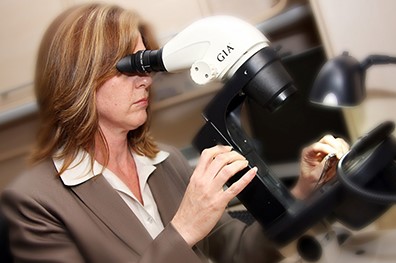
  Diamond and gemstone cutters traditionally come from generations of family. Cutting skills are passed from generation to generation and taken very seriously. The cutting procedure is precise and takes hours for just one gemstone to become fully polished. Tools and equipment have evolved over time, making the process more exact. For that reason, as with all technological advances in tooling, a greater cost is shouldered to stay up-to-date.
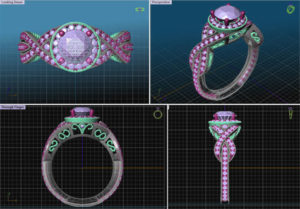 Jewelry designers bring these materials together in the wearable pieces of art that we call jewelry. While traditional wax carving of prototypes are still sometimes used, today the majority of jewelry is designed with CAD – computer aided design. These computer programs cost thousands, and the designers who use them also spend thousands of dollars in training. Designing one piece of jewelry can take hours or even days. The designer makes a prototype before a piece of jewelry is produced in multiples and then completes detailed modifications. Finally, a model is made for casting once the design is approved.
 Casting a piece of jewelry requires sophisticated equipment. Some design studios have their own casting equipment onsite. But the majority of casting jewelry is done in large operations, similar to auto manufacturing, where focusing on one step is most efficient.
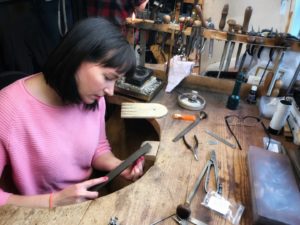
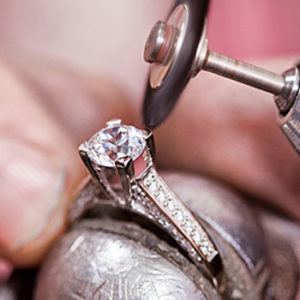 Diamond and gemstone setting requires a skilled goldsmith. In large manufacturing settings, much like auto manufacturing, diamond and gemstone setters do only setting. In small shops and studios, goldsmiths handle all steps of casting, finishing, and stone setting. Indeed, the risk is relatively high for damage during the setting process. Although not often, a diamond or gemstone can chip or break during the setting procedure.
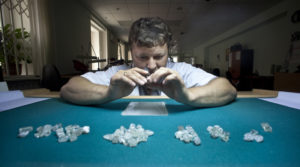 Wholesale distribution involves many people and sometimes two to three levels of wholesale. Decades ago, wholesalers carried hundreds of pieces of jewelry in large rolling bags, traveling hundreds of miles going door to door selling to retailers. Robbery was a real threat, and today very few wholesalers take this risk. Instead, several times during the year wholesalers show their collections at jewelry and gem shows. The risk of traveling with their goods is still there and security for these vendor shows is very tight.
 The final destination before your jewelry is yours is the retailer. The jewelry retailer invests in an inventory offering a range of styles and prices. Other costs for the retail jeweler include security systems, vaults, gemological equipment, payroll, insurance, and light bills. The sales staff require training to help them understand and relay important information to the shopper.